Sex Worker Challenges - Real Stories from the Frontlines

You think you know what sex work is because you’ve seen it in movies or heard headlines. But the real story? It’s not about glamour or crime. It’s about survival, dignity, and systems that keep people trapped - even when they’re doing everything right.
What No One Tells You About Sex Work
Sex work isn’t one thing. It’s not a monolith. It’s a woman in Manchester working online from her flat because she can’t find another job after leaving an abusive relationship. It’s a non-binary person in Birmingham using tips from clients to pay for hormone therapy. It’s a single mom in Glasgow juggling three platforms to afford daycare. These aren’t stereotypes. These are real people doing work that’s legal in many places - but treated like a crime just for existing.
The biggest myth? That sex workers choose this life because they’re desperate. The truth is, most of them chose it because it’s the best option they have. Not because they want to, but because the alternatives - minimum wage jobs with no benefits, zero job security, or welfare systems that punish you for earning too much - are worse.
The Hidden Costs of Stigma
Imagine being told you’re not allowed to open a bank account because of your job. Or that your landlord can kick you out if they find out what you do. Or that when you call the police for help, they don’t treat you like a victim - they treat you like the problem.
This isn’t fiction. In the UK, while selling sex isn’t illegal, nearly everything around it is. Advertising? Illegal. Working with another person? Illegal. Renting a space to meet clients? Illegal. So sex workers are forced into isolation - working alone, in unsafe places, without backup. They can’t form unions. They can’t report violence without risking arrest. They can’t get loans. They can’t even get a phone contract in some cases.
And the stigma? It’s not just social. It’s economic. A 2024 study by the University of Edinburgh found that 78% of sex workers in England and Wales had been denied housing because of their occupation. One woman told researchers she had to lie about her job to get a flat - and when the landlord found out, he changed the locks while she was out.
Violence Isn’t an Accident - It’s Built Into the System
Sex workers are 45 times more likely to be murdered than other women, according to data from the Global Network of Sex Work Projects. That’s not because they’re ‘risky’ - it’s because they’re invisible. When you’re pushed underground, you lose access to protection.
Take the case of Jody, a trans sex worker in Leeds. She was attacked by a client who choked her until she passed out. When she called the police, they asked if she’d been ‘provoking him.’ They didn’t take a statement. Two weeks later, another client assaulted her. This time, she didn’t call anyone. She just moved.
Most sex workers don’t report violence. Why? Because they’ve seen what happens when they do. Cops don’t protect them. Social services don’t support them. Courts don’t believe them. So they learn to handle it alone - or not at all.
Technology: Lifeline or Trap?
For many, the internet changed everything. Platforms like OnlyFans, ManyVids, and personal websites let sex workers control their own terms. No more street corners. No more pimps. No more clients who think they own you.
But here’s the catch: those same platforms ban sex work. OnlyFans suspended over 12,000 accounts in 2023 under pressure from banks and payment processors. ManyVids started requiring ID verification that blocked undocumented workers. Stripe and PayPal freeze accounts without warning. One worker in Bristol lost £18,000 in savings overnight when her PayPal account was shut down - no explanation, no appeal.
So now, sex workers are stuck. They need the internet to survive - but the internet is designed to kick them out. They use encrypted apps, burner phones, and coded language just to stay connected. It’s exhausting. And it’s expensive.
Healthcare? Try Getting an Appointment
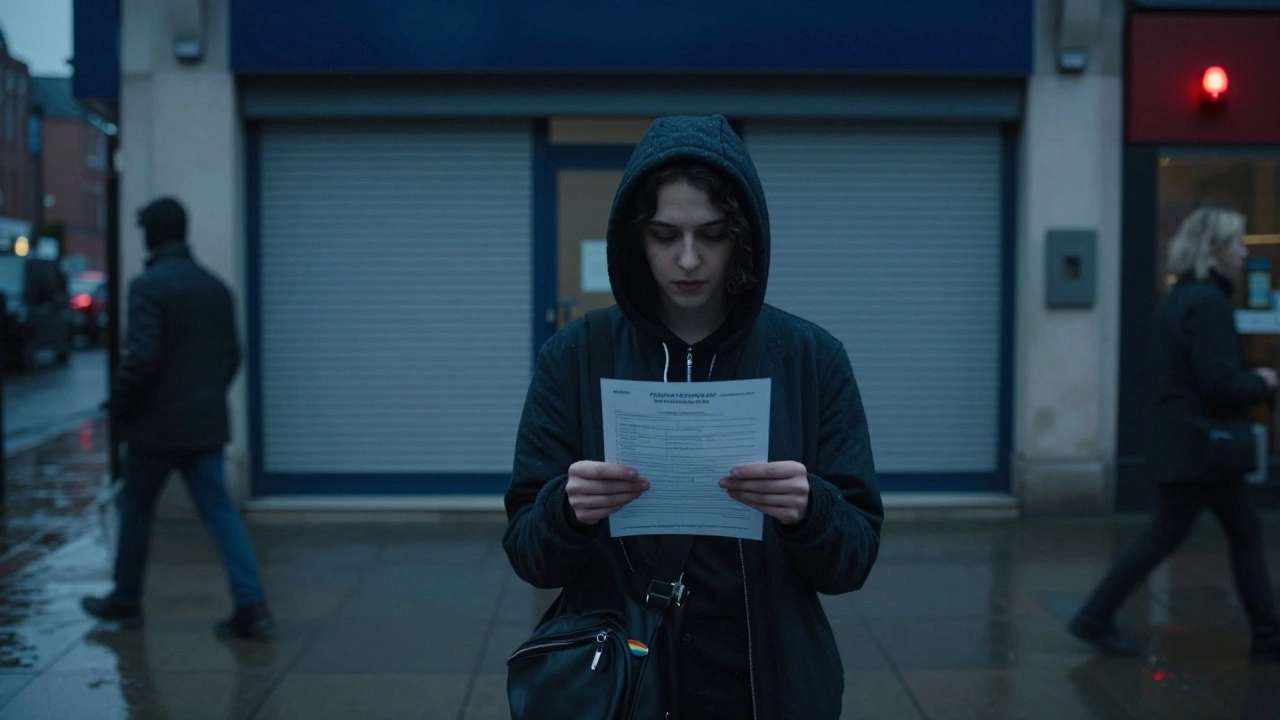
Sex workers are told to get regular STI tests. That’s good advice - if you can actually get an appointment.
Most NHS clinics don’t have sex worker-specific services. When you walk in and say you’re a sex worker, you’re often met with judgment. A nurse might say, ‘Why don’t you get a real job?’ A doctor might skip the STI screen and just hand you condoms. One woman in Liverpool said she went to her GP five times before someone finally tested her - and even then, the test was done in the hallway because the receptionist didn’t want her in the waiting room.
Access to mental health care is even worse. Trauma from violence, isolation, and stigma piles up. But therapists? Most don’t know how to help. Some think sex work is the cause of trauma - not the result of it. One peer support group in London found that 62% of members had been turned away by therapists who refused to work with them because of their job.
What’s the Alternative?
People say, ‘Why not just get a different job?’ But what if you’re a single parent with no childcare? What if you have a criminal record from a past arrest? What if you’re trans and can’t get hired anywhere else? What if you’re an immigrant with no right to work legally?
Decriminalization isn’t about making sex work ‘safe’ - it’s about removing the laws that make it dangerous. In New Zealand, where sex work has been fully decriminalized since 2003, violence against sex workers dropped by 40%. Access to healthcare improved. Workers reported feeling more respected. And crime rates didn’t go up - they went down.
Scotland is currently debating a similar model. The UK government? Still pushing laws that criminalize clients - which pushes sex workers further into hiding. It sounds like protection. It’s actually punishment.
Who’s Really Fighting for Change?
Not politicians. Not charities that treat sex workers like victims needing saving. The real change comes from sex workers themselves.
Groups like the English Collective of Prostitutes and UK Network of Sex Work Projects run peer support lines, legal clinics, and safety workshops. They train workers to spot predators, document abuse, and navigate the courts. They don’t ask for pity. They ask for rights.
One worker in Brighton runs a free online course on how to screen clients using digital tools - no apps, no platforms, just basic tactics anyone can use. She’s taught over 2,000 people. No grant. No funding. Just a WhatsApp group and a lot of coffee.

How You Can Help
You don’t need to donate money. You don’t need to volunteer. You just need to stop believing the lies.
Don’t assume sex workers are ‘exploited’ unless they say so. Don’t call them ‘prostitutes’ - that word carries centuries of shame. Don’t laugh at memes that mock them. Don’t support politicians who promise to ‘end trafficking’ by criminalizing sex work.
Instead, listen. If a sex worker tells you their story, believe them. If they say they’re safe and in control, respect that. If they say they need legal protection, support decriminalization. And if you see someone being harassed for their work - speak up. Even a simple ‘That’s not okay’ can change someone’s day.
Comparison: Criminalization vs. Decriminalization
| Factor | Criminalization (UK Model) | Decriminalization (New Zealand Model) |
|---|---|---|
| Access to police protection | Low - workers fear arrest or judgment | High - treated as victims, not criminals |
| Ability to work safely | Restricted - forced to work alone or in hidden locations | Allowed - can rent spaces, work with peers |
| Access to healthcare | Barriers - stigma blocks care | Improved - clinics offer sex worker-friendly services |
| Financial stability | Low - banking bans, no loans, sudden account freezes | Higher - can open bank accounts, get contracts |
| Violence rates | High - 45x more likely to be murdered | Reduced by 40% since 2003 |
Frequently Asked Questions
Is sex work legal in the UK?
Selling sex itself isn’t illegal in the UK, but almost everything that makes it safer is. Advertising, working together, renting a space, or even talking to someone about your work can be prosecuted under laws like the Sexual Offences Act. This creates a legal gray zone where sex workers are constantly at risk - even when they’re following the rules.
Why don’t sex workers just quit?
Many do - but the system makes it hard. Without savings, childcare, or job skills, leaving often means homelessness or debt. Some workers use sex work as a bridge - to pay for school, get out of debt, or survive between jobs. Others stay because it’s the only work that pays enough to support their families. Judging their choices ignores the lack of real alternatives.
Do sex workers get exploited?
Some do - but exploitation isn’t caused by sex work itself. It’s caused by poverty, trafficking, and lack of legal protection. Criminalizing sex work makes exploitation worse by pushing people into unregulated spaces. The solution isn’t to ban sex work - it’s to protect workers’ rights, no matter what job they do.
What’s the difference between sex work and trafficking?
Sex work is consensual labor. Trafficking is forced labor - someone is controlled, threatened, or deceived. Mixing the two harms both groups. Laws that target sex work often trap trafficking victims in danger, because they’re afraid to come forward. Real anti-trafficking efforts focus on holding traffickers accountable, not punishing workers.
Can I support sex workers without paying for services?
Absolutely. Donate to peer-led organizations like the English Collective of Prostitutes. Share their stories. Challenge stigma when you hear it. Support campaigns for decriminalization. Vote for leaders who listen to sex workers - not about them, but with them. Your voice matters more than your wallet.
What Comes Next?
The fight isn’t over. But it’s not hopeless. More sex workers are speaking out. More lawyers are taking their cases. More people are realizing that dignity isn’t a privilege - it’s a right.
You don’t have to understand sex work to respect it. You just have to believe that no one should be punished for trying to survive.

Beverly DeSimone
January 7, 2026 AT 12:22Thank you for writing this. I’ve never thought about how banking bans and housing discrimination are part of the system that traps people. It’s not about choice-it’s about survival. I’m sharing this with my book club.
Also, the part about the nurse testing her in the hallway? That broke my heart. No one should be treated like a liability just for doing work that keeps them alive.
Kathy Irion
January 7, 2026 AT 15:45While I appreciate the intent behind this piece, I must respectfully point out that the normalization of sex work as ‘labor’ overlooks the deep psychological trauma that often underlies it. Even if legal, the emotional toll is rarely addressed in policy debates. We must not confuse legality with healing.
Also, the word ‘prostitute’ is not inherently shaming-it’s a clinical term. Language matters, yes, but so does precision.
Marie Elizabeth
January 8, 2026 AT 11:02My cousin used to work online during her transition. She said the only thing that kept her sane was the community she found through forums. No one helped her with rent or meds-but strangers on Reddit sent her gift cards for groceries. Small things, but they mattered.
I’m not a sex worker. But I know what it means to be invisible. And this post? It made me see people again.
Danny van Adrichem
January 9, 2026 AT 17:00Let’s be real here-this isn’t about dignity or rights. This is about radical leftist ideology pushing a sexual agenda under the guise of ‘human rights.’ The data they cite? Manipulated. The New Zealand model? A social experiment that failed to account for rising organized crime and underage exploitation.
And don’t get me started on OnlyFans. Those platforms are just digital brothels with better UI. The fact that they’re being ‘canceled’ by banks? Good. We should be shutting this down, not funding it.
Also, 45x more likely to be murdered? Where’s the source? Probably some activist group with a grant. 🤡
Nishad Ravikant
January 11, 2026 AT 16:53This is deeply moving. In India, many women turn to this work because there are no other options-especially after divorce or widowhood. The stigma is worse here. No one speaks about it. But I’ve seen women who work online and still send their children to school. They deserve respect, not judgment.
I hope more people in the West realize that this isn’t a Western problem-it’s a human one.
S.l F
January 13, 2026 AT 04:24With the utmost respect and sincere admiration for the courage it takes to share such personal narratives, I must commend the author for presenting a perspective that is both deeply human and systematically overlooked.
It is my firm belief that the criminalization of ancillary activities surrounding consensual adult labor is not only counterproductive but fundamentally unjust. The structural violence inflicted upon these individuals is a direct consequence of legislative neglect and moral panic.
May we all strive to uphold dignity as a universal right, irrespective of occupation.
Michael Allerby
January 13, 2026 AT 14:22Man, this hit different. I used to work security at a club back in ‘19. Saw a lot of stuff. One girl, 22, had a 3-year-old and worked three apps. She’d sleep in her car between shifts because her landlord found out. One night she asked me if I’d ever been so broke you’d sell your soul for a paycheck.
I didn’t answer. I just bought her coffee.
Turns out, she didn’t need pity. She needed someone to say, ‘I see you.’
And now? I’m volunteering with a local org that helps sex workers get IDs and bank accounts. No drama. Just action.
Stop talking. Start doing.
Devin Tankersley
January 13, 2026 AT 21:03Oh please. This is just woke propaganda dressed up as journalism. You think decriminalizing sex work is gonna fix everything? You’re delusional. It’s not about ‘rights’-it’s about predators using ‘choice’ as a loophole to exploit women and children.
And don’t give me that ‘New Zealand worked’ nonsense. They’ve had a spike in underage trafficking since 2018. The data’s buried, but I’ve seen the reports.
Also, why are all the ‘sex workers’ in this piece white? Where are the Black and Brown women? Oh right-because they’re too busy being trafficked to be ‘empowered.’ 😏
Mathew Thomas
January 15, 2026 AT 04:32Survival isn’t a choice. It’s a calculation.
And dignity? It doesn’t need permission.
Jennifer bomabebe
January 16, 2026 AT 02:19Oh my goodness, this article... it is so, so, so important! I am from Nigeria, and in my country, we have so many women who are forced into this situation because of poverty, and also because of cultural stigma that does not allow them to speak up! They are silent, and they suffer alone, and no one listens! I weep when I read this, because it is true, it is true, it is true! We must fight for their rights, not with anger, but with love, and with justice, and with truth! Please, someone, help them! 🙏🙏🙏