A Day in the Life of a Sex Worker: Real Stories, Real Risks, Real Rights
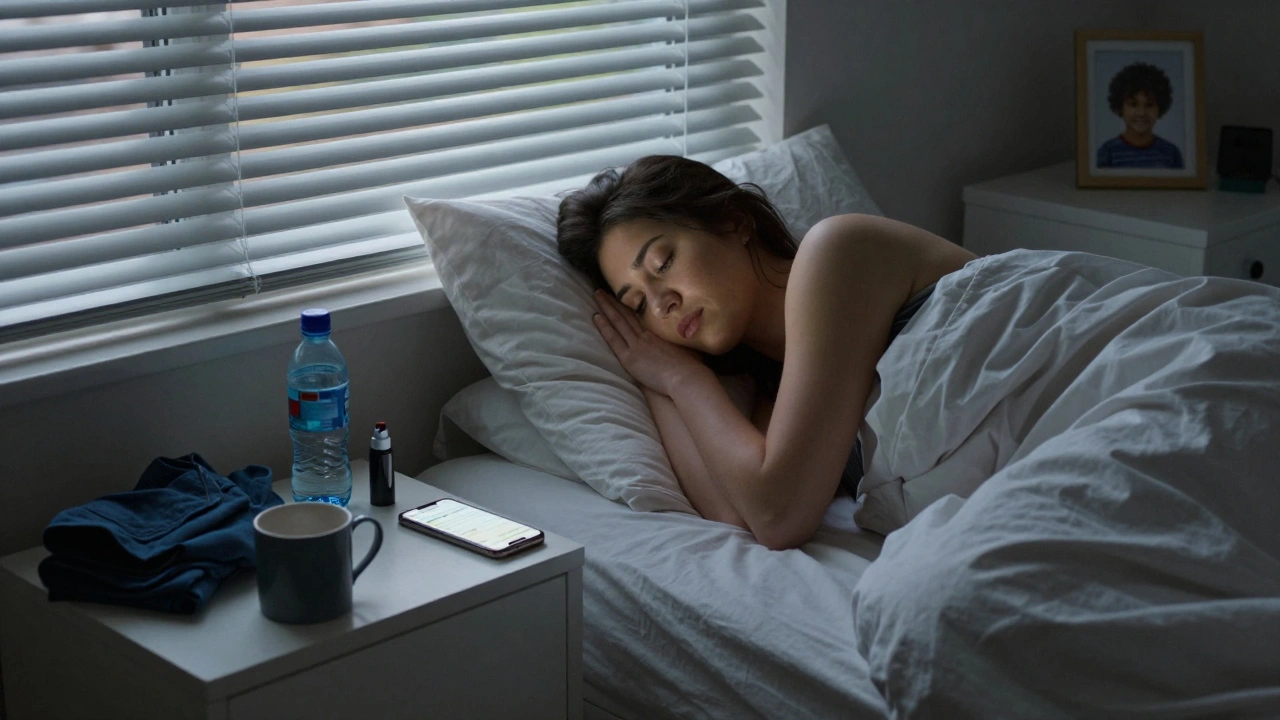
You’ve seen the movies. The glamorized version. The one where someone walks into a luxury apartment, gets paid in cash, and leaves before sunrise. But what does a real day look like for a sex worker? Not the fantasy. Not the stereotype. The actual, messy, exhausting, sometimes empowering, often dangerous reality?
It Starts Before the Sun Rises
Most sex workers don’t start their day with a massage or a champagne toast. They start by checking their phone. Messages from clients. Payments that didn’t come through. A message from a friend who got arrested last night. A warning about a new predator in the neighborhood. For those who work online-through platforms like OnlyFans, OnlyFans alternatives, or private messaging apps-the morning is spent replying to DMs, scheduling appointments, editing content, and managing subscriptions. Some upload videos the night before so they can sleep. Others film during lunch breaks, between other jobs. For those who work on the street or in apartments, the morning is about safety prep. Checking the weather. Making sure the door locks. Writing down the client’s license plate. Telling a friend where they’re going. Taking a photo of the client’s face. These aren’t paranoid habits. They’re survival tools.What They Actually Do All Day
Sex work isn’t one thing. It’s dozens of different jobs under one label. There’s online camming, escorting, street-based work, massage parlors, brothels, adult content creation, phone sex, and more. Each has its own rhythm. A cam girl might spend 6 hours on stream, chatting with viewers, performing short acts, and turning away requests that feel off. She might take a 15-minute break to eat a sandwich, then go back on. Her income? $300 to $1,500 a day, depending on her audience and consistency. But she pays 50% to the platform. She buys her own lighting, her own costumes, her own internet. No health insurance. No paid sick days. An independent escort might meet two clients in a day. One at a hotel. One at her own place. Each session lasts 60 to 90 minutes. She charges $200 to $600 per visit. She cleans the room after. Washes her clothes. Washes her face. Washes her hands. Over and over. Street-based workers often work at night. They’re exposed to rain, cold, police sweeps, and violence. Many have been assaulted. Some have been killed. They carry pepper spray. They have a code word with a friend. They never go alone. They know every alley, every police car, every safe corner.The Hidden Costs
People think sex work is all about the money. But the real cost is invisible. There’s the emotional toll. The constant need to perform. To smile. To say yes when you want to say no. To shut down your feelings so you don’t break down after the third client of the night. There’s the stigma. Family members who cut you off. Friends who ghost you. Job applications you never get because your name shows up in an old news article. Landlords who kick you out when they find out what you do. There’s the legal risk. In most places, selling sex is illegal. Buying it? Often not. That imbalance means sex workers are arrested, fined, and criminalized-while the clients walk away with nothing but a receipt. And then there’s the health risk. Condoms aren’t always used. Some clients refuse. Some threaten violence if you insist. Some pay more if you don’t use protection. That’s not choice. That’s coercion.
Why People Do It
You might wonder: why not get a regular job? Try this: You’re a single mom. You work two part-time jobs. You make $18 an hour. Rent is $1,200. Childcare is $800. Your car breaks down. Your kid gets sick. You have $47 left after bills. What do you do? For many, sex work isn’t a choice between good and bad. It’s a choice between bad and worse. It’s faster. It’s more flexible. It pays better than waiting tables or cleaning offices. And for some, it’s the only way to afford housing, medical care, or education. A 2023 study by the Global Network of Sex Work Projects found that 68% of sex workers said they entered the industry because they needed money to survive-not because they wanted to. Only 12% said they did it for the freedom.What No One Tells You About Safety
Safety isn’t about wearing heels or carrying a purse. It’s about systems. The best safety tool? Community. Many sex workers organize in collectives. They share lists of dangerous clients. They check in with each other before and after meetings. They have emergency numbers. They train each other in de-escalation. They know how to spot a cop pretending to be a client. Some use apps like Red Canary or Shine-platforms built by sex workers for sex workers-that let you report a client anonymously and warn others. Others use voice-activated recording apps that start recording when they say a phrase like “I’m safe.” But here’s the truth: no app, no safety tip, no police officer can fully protect you if the law treats you like a criminal.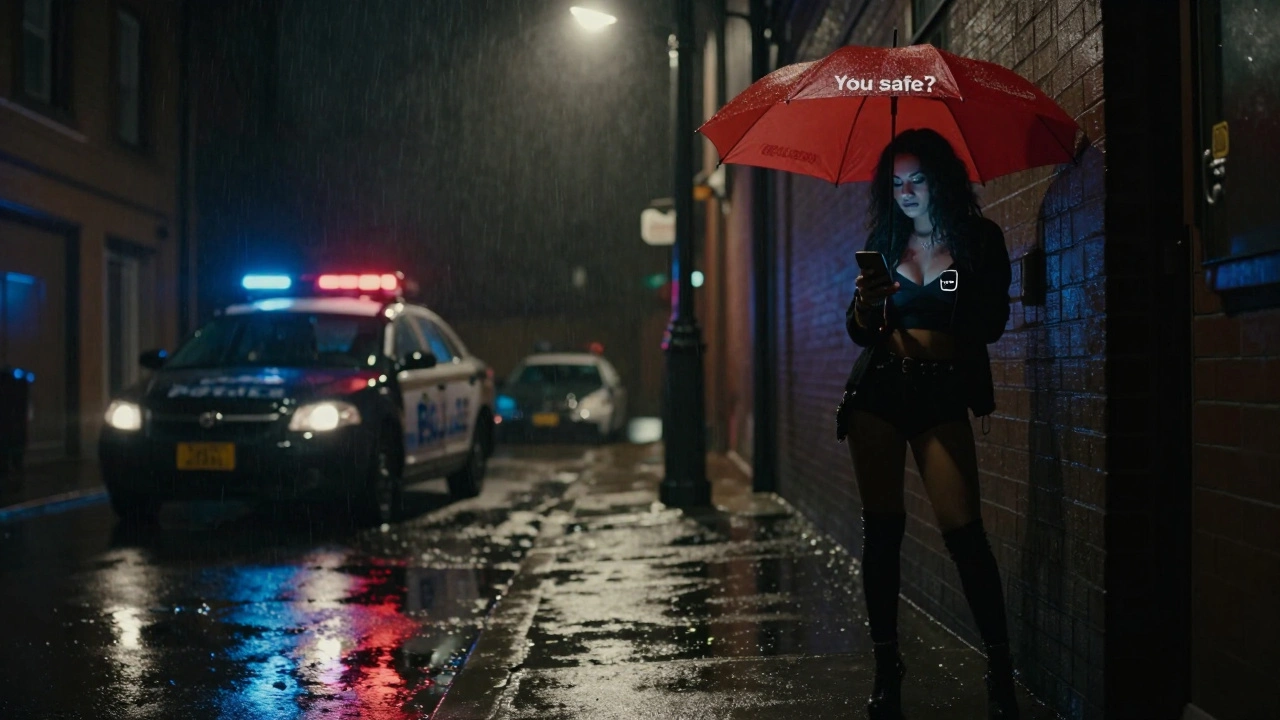
Decriminalization Works
New Zealand decriminalized sex work in 2003. What happened? Violence against sex workers dropped by 40%. Access to healthcare improved. Workers reported feeling more respected. Police started helping them, not arresting them. In 2022, Canada’s Supreme Court struck down laws that forced sex workers to work in dangerous conditions. The court ruled: “Laws that make sex work more dangerous violate the right to security of the person.” But in most of the U.S., in most of Europe, in most of Asia-it’s still illegal. And when it’s illegal, people die.What You Can Do
You don’t have to understand it. But you can stop harming it. Don’t assume sex workers are victims. Many are. But many are also survivors, entrepreneurs, parents, artists. They’re not defined by their work. Don’t call it “prostitution.” That word is loaded with shame. Use “sex work.” It’s what they call themselves. Support organizations that fight for their rights: SWOP USA, Global Network of Sex Work Projects, Red Umbrella Fund. Donate. Volunteer. Amplify their voices. And if you’re a client? Stop pretending you’re not part of the system. Your actions have consequences. Choose to respect boundaries. Pay fairly. Never pressure. Never threaten. Never assume consent.Final Thought
A day in the life of a sex worker isn’t about sex. It’s about survival. About dignity. About being seen as human in a world that wants to erase you. They wake up. They work. They clean up. They go to bed. And then they do it again tomorrow. The only difference between them and you? They do it without benefits. Without protection. Without the luxury of being ignored by the law. Maybe that’s the real story here-not what they do, but how they keep going anyway.Is sex work always dangerous?
Not always, but it’s often risky-especially when it’s illegal. When sex work is criminalized, workers can’t report violence, access healthcare, or screen clients safely. Legalization and decriminalization have been shown to reduce harm significantly. In places like New Zealand and parts of Australia, where sex work is regulated, violence and exploitation rates are much lower.
Do sex workers make a lot of money?
Some do. Many don’t. Top online creators can earn $10,000 a month. But that’s rare. Most earn between $200 and $800 a week, after platform fees, supplies, and taxes. Street-based workers often make less than minimum wage after accounting for time, risk, and expenses. Income varies wildly based on location, gender, race, and access to clients.
Are all sex workers victims of trafficking?
No. That’s a harmful myth. While trafficking does happen-and it’s horrific-it’s not the same as consensual sex work. Most sex workers enter the industry voluntarily, often because they need money to survive. Equating all sex work with trafficking ignores the agency of millions of people and makes it harder to help actual victims, who may avoid services for fear of being arrested.
Why don’t sex workers just get another job?
Many have tried. But barriers like lack of education, criminal records, childcare needs, discrimination, and housing instability make other jobs hard to get or keep. Sex work often offers more flexibility, faster pay, and fewer hours than low-wage jobs like cleaning or fast food. It’s not about preference-it’s about what’s possible.
Is sex work legal anywhere?
Yes. In New Zealand, parts of Australia, the Netherlands (in licensed brothels), Germany, and some regions in Nevada, USA, sex work is legal or decriminalized. In these places, workers have better access to health services, legal protection, and labor rights. But in most countries-including most of the U.S.-it’s still illegal, which makes everything more dangerous.
Kathryn MERCHENT
December 28, 2025 AT 06:04This whole post is just propaganda wrapped in emotional manipulation
Sex work is illegal for a reason-it destroys families, spreads disease, and normalizes exploitation
You want me to support this? No thanks, I’ll stick with laws that protect society
Daniel Landers
December 30, 2025 AT 02:23Look, I get it-some people do this out of necessity 😔
But let’s be real: 90% of the people in this industry are trapped, not empowered
And no, calling it ‘sex work’ doesn’t change the fact that it’s exploitation dressed up as choice 🚫💔
Decriminalization? That’s just letting predators keep operating with a badge
Nidhi Gupta
January 1, 2026 AT 01:27in india we dont have this problem much
people who do this are just lazy and want easy money
why not get a job at call center or walmart
and also why u always say 'sex worker' like its a real job
its not its just selling body
and u think decriminalize? no no no
they should be jailed not helped
Stephen Park
January 1, 2026 AT 23:26It is imperative to acknowledge that the normalization of commercial sexual activity constitutes a systemic erosion of moral and social infrastructure.
Statistical analyses conducted by the Cato Institute and the Heritage Foundation consistently demonstrate elevated rates of substance abuse, mental health deterioration, and intergenerational trauma among individuals engaged in sex work.
The assertion that decriminalization equates to safety is empirically unsound; jurisdictions that have adopted such policies exhibit increased human trafficking infiltration and organized crime consolidation.
Furthermore, the conflation of economic desperation with agency is a rhetorical fallacy that obscures the predatory structures underlying this industry.
To advocate for decriminalization is not to liberate-it is to institutionalize vulnerability.
James Foster
January 3, 2026 AT 04:42I’ve talked to a few sex workers in my city, and honestly, they’re some of the most grounded, smart people I know
They’re juggling rent, kids, medical bills, and still managing to be kind to strangers
Yeah, some make big money, but most are just trying to get through the week without getting hurt
And the apps they use? Like Red Canary? Those are lifesavers
People act like this is some wild underground thing-but it’s just people trying to survive in a broken system
And if you think they should just get a “normal” job, try working two jobs, paying $1,200 rent, and then having your car break down with no savings
What’s your plan then?
Also, the fact that clients don’t get arrested but workers do? That’s not justice, that’s hypocrisy
Support the workers, not the stigma
Amber Oravecz
January 5, 2026 AT 03:29They wake up. They work. They clean up. They go to bed.
And then they do it again tomorrow.
That’s not a fantasy.
That’s courage.
Jamie Lane
January 5, 2026 AT 14:08One must consider the ontological implications of labor commodification within a capitalist framework.
When human intimacy becomes transactional, the boundaries between personhood and product are blurred.
Yet, to condemn those who engage in this labor without acknowledging the structural failures that necessitate it is to commit an ethical oversimplification.
Decriminalization, then, is not an endorsement of the practice-but a recognition of the dignity of those who, under duress, exercise agency in the most constrained of circumstances.
Perhaps the real question is not whether sex work should be permitted, but why society has failed to provide alternatives that afford the same autonomy without the peril.
Nadya Gadberry
January 6, 2026 AT 22:50Look, I’m not saying sex work is bad... I’m just saying it’s kinda sad, you know?
Like, people are just... stuck in this loop
And yeah, decriminalization sounds nice in theory, but who’s really benefiting?
Probably the app developers and the rich clients
And don’t even get me started on the ‘empowerment’ narrative-sounds like a corporate slogan
Also, I’m pretty sure the ‘68% need money to survive’ stat is cherry-picked
But hey, I’m just saying... it’s complicated 😐
Maybe we should just all pretend this doesn’t exist?